From 27–31 July 2026, the International Centre for Integrated Mountain Development (ICIMOD) convened regional experts and partners for technical training, inclusive science communication, and dialogue to advance permafrost research across the Hindu Kush Himalaya. Permafrost is widespread across the Hindu Kush Himalaya (HKH), yet remains poorly studied. Beyond the Tibetan Plateau, the region still lacks sufficient boreholes, standardised monitoring methods, and an operational monitoring network. As warming accelerates, understanding permafrost distribution, degradation, and related hazards is increasingly important for mountain communities and decision-makers.
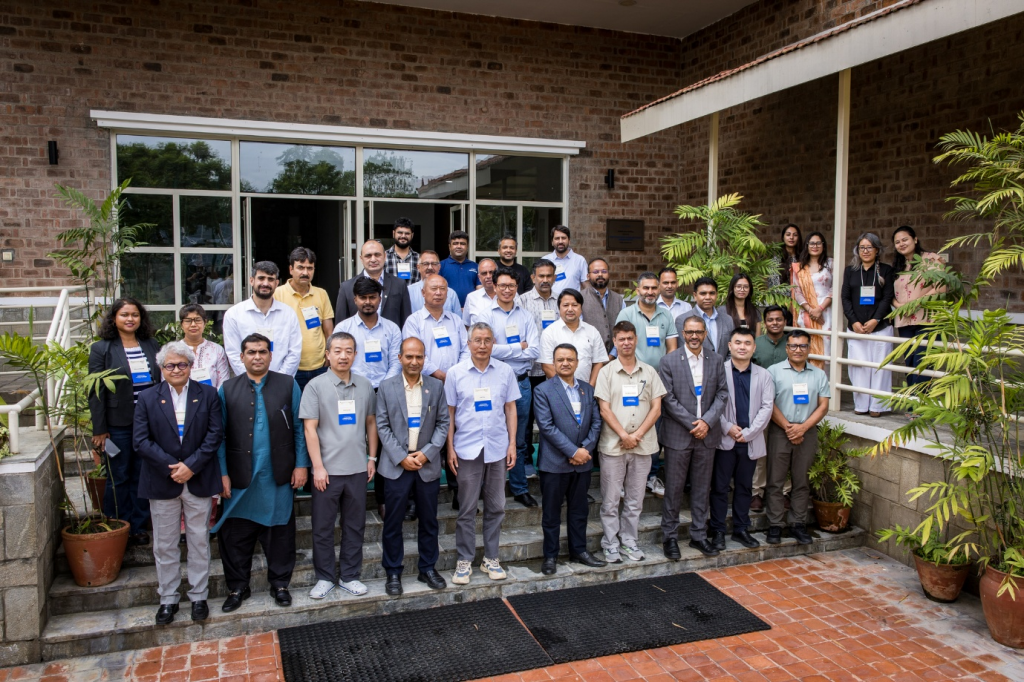
Experts at the regional dialogue on Permafrost research in the Hindu Kush Himalaya. Photo: Jitendra Bajracharya/ICIMOD
Experts agreed that the HKH has a strong scientific foundation but needs better observation systems. Research is expanding in permafrost mapping, remote sensing, rock glacier inventories, climate modelling, and field studies.
“This week showed us what’s possible when scientists, institutions, and communities work from the same evidence base. We have to turn that shared understanding into a lasting, coordinated monitoring system for the region.” Qianggong Zhang, Head, Climate and Environmental Risks, ICIMOD
A three-day workshop on energy balance modelling selected 20 early-career researchers from more than 100 applicants. Training covered model setup, input-data preparation, surface energy fluxes, snow and ground-temperature dynamics, model evaluation, and interpretation for Himalayan permafrost environments.
“We brought together the people who are doing the actual work on the ground, those who are deploying sensors, mapping rock glaciers, running the models. That’s where the gaps in our knowledge become obvious, and also where the solutions start”, Mohd Farooq Azam, Senior Intervention Manager for Cryosphere intervention, ICIMOD.
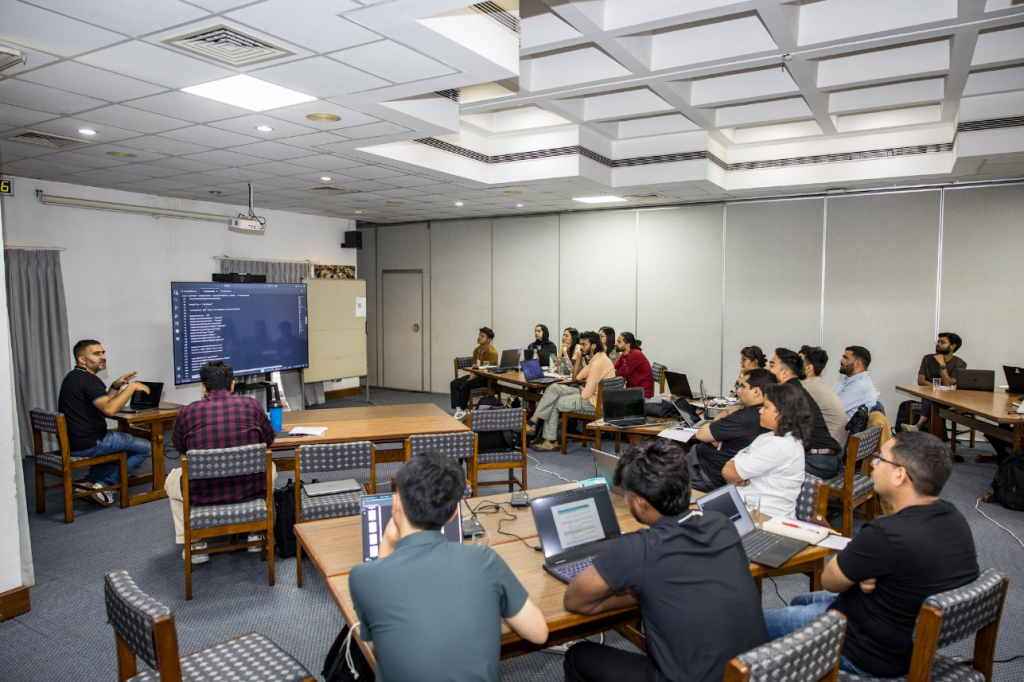
Workshop on energy balance modelling for permafrost was led by John vani, postdoctoral researcher, University of Trento, Italy. Photo: Jitendra Bajrachaya, ICIMOD
ICIMOD began permafrost research in 2013 by mapping HKH-wide distribution using rock glacier polygons, followed by ground-temperature sensor deployment in Nepal’s Langtang Valley in 2014. Research has since expanded to Nepal’s Limi Valley with Tribhuvan University and Bhutan’s Shodug Glacier with the National Center for Hydrology and Meteorology.
ICIMOD also held a session on gender equality and social inclusion (GESI) and science communication, stressing accessible and relevant communication of cryosphere research to policymakers, practitioners, and mountain communities.
Recent hazard events highlight the impacts of changes beneath high-mountain landscapes. A thermokarst-related event in Humla, Nepal, in May 2025 affected local communities, while a June 2021 hill collapse in Bhutan, likely linked to permafrost thaw, further underscored the need to translate science into practical knowledge. Participants emphasised clear and inclusive communication to support preparedness, policy engagement, and community resilience.
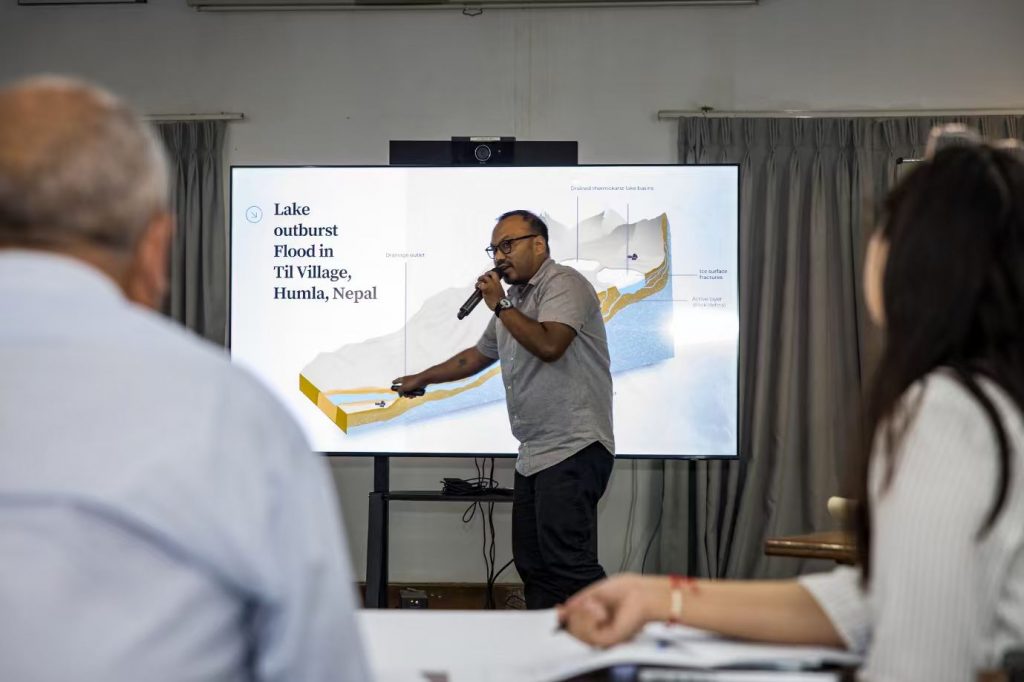
Sudip Maharjan, Graphic designer, ICIMOD explaining how to use graphic to explain scientific process to lay audience. Photo: Jitendra Bajracharya, ICIMOD
The week concluded with a regional dialogue among scientists, government representatives, and institutional leaders from Bhutan, China, India, Nepal, and Pakistan. Participants called for stronger data sharing, sustained collaboration, and greater political commitment to improve decisions affecting mountain communities.
Provided by Qianggong Zhang & Lin Chen